Bulletin No. 109
THE HELLENIC LINK, Inc.

Member Update- BULLETIN
Editorial Committee: Ahilleas Adamantiades, Alex Economides, Dean C. Lomis, Katherine Efthymiatou-Stabile, Contributing Editor: Evangelos Calamitsis, Assoicate Editor: John Angelidis; Acting Editor: Costas Efthymiou
No. 109, July-August 2013
News from and about our Association
— We are pleased to inform our readers that the colleague-new member on the Advisory Council, John Angelidis, Professor and Chairperson, Department of Management, The Peter J. Tobin College of Business, St. John’s University, has graciously accepted the appointment as Associate Editor of the Hellenic Link Bulletin. In this capacity, he will lead an effort to consolidate incremental upgrade of the quality, extent coverage of interdisciplinary topics, and improve its effective presentation. The intended goal is the circulation of an authentic informational e-medium, which hopefully will present for the highest possible enlightenment diverse topics of interest to Hellenism. Focal themes of articles to be sought and considered for publication will include Hellenic education and culture, the economy, the environment, energy issues and problems, political science studies, and ethnic concerns.
A first change about to be introduced will have the present and future members of the Editorial Committee
oversee editorially the publication of articles by Hellenic Link members or friends ellenic KLinkexperts in their fields and also to contribute articles of their own on topics akin to their professional interests and endeavors. Editorial assignments will be further articulated by intra-committee discussions and framed as consistent policy.
All members of the Advisory Council, including those who currently are not serving as “editors,” will be called to support the Bulletin’s planned upgrading, and contribute to its publication regardless of their
residence location.
— In the collaborative project on Byzantine Civilization, considerable articulation in planning has been attained by experts who are active participants in the field. The central feature of the project is to address educationally our society’s existing now-low knowledge and appreciation level on the role played by Byzantium in the historical development of Western Civilization. The project’s premises are scientific as well as educational; its specific goals have been defined and their attainment will be pursued by
publication of focused scientific research, coupled with an outreach educational effort. Through this combination, it is hoped that enlightenment of Byzantium’s public perception will gradually increase, as the 1,000-year historical experience and achievements of the Byzantine Empire will be elucidated, proving its value as a guiding model for tackling and solving major contemporary problems in our and other global
societies.
As with other cultural objectives pursued in previous projects, the Hellenic Link depends for the actual implementation of this Byzantine endeavor also on the voluntary collaboration of its members and that of cooperating philhellene colleagues. The conduct and management of cultural projects is overseen by the Advisory Council on Hellenic Education, which includes leading academics and professional educators. In this particular Byzantine project, they shall seek focused writings, based on scientific data, by members of the American academic/educational communities, scholars of the Greek Institute of Historical Research
( Εθνικόν Ιδρυμα Ερευνών), and members of the Association of Byzantine Studies of the U.S.A. and Canada. More details on this project, directed by Dr. Constantine Hatzidimitriou, will be forthcoming and presented in the Bulletin as future steps already planned are put into effect.
— The Hellenic Link was recently invited to assist in a special educational-exchange project in which direct collaboration on cultural and scientific subjects would bring together students of a Greek and a United States high school. The request was made by the Model Pilot Experimental School affiliated with the University of Athens (Πρότυπον Πειραματικόν Σχολείον Πανεπιστημίου Αθηνών). The HL Advisory Council gladly responded making the relevant inquiries at several U.S. high schools, and passed along information on the type of collaboration sought. Contacts with the direction and faculties of schools produced expression of interest in the proposed collaboration by two senior high schools in New York, and facilitated direct exchange of content-information and views among and between respective educators.
We believe that such an exchange-project can build bridges of friendship and understanding among participants who can benefit mutually by the cooperative research effort of both teachers and students.
The students who would carry on this project plan to communicate directly on the progress and results of their research by teleconferences. We do hope that the experience and learning to be gained in the joint endeavor will be substantive and fulfilling for all concerned; if successfully completed, we also hope and wish that it would find imitators among additional Greek and U.S. schools.
Update on the “Standards for Teaching Modern Greek” Project
In a form letter sent recently to leading Educators affiliated with organizations or institutions responsible for the teaching of the Modern Greek (MG) Language, addressed jointly by Dr. Paul Sandrock, Director of Education at the American Council on the Teaching of Foreign Languages (ACTFL) and the Task Force (TF) engaged in the project, the recipients of the letter are invited to participate in a transparent and inclusive process of reviewing the semi-final draft of “Standards for Learning Modern Greek Language in the United States,” drawn up in July 2013. The goal is “to produce the best and most useful standards for
the teaching of Modern Greek.” Attached to the letter are the Draft of Standards and a “Template” needed for revisions. The same letter also disclosed the timeline for completion of the work, which includes language-specific standards, as well as learning scenarios:
1. By November 2013: first draft of revised language-specific scenarios;
2. By March 2014: draft of revised language-specific standards;
3. By July 1, 2014: finalized language-specific standards and scenarios.
The letter includes an important admonition to ACTFL’s Modern Greek Special Interest Group (SIG, already formed) to develop its strength and functionality as a forum capable to reach consensus on issues related to MG standards and their implementation.
To Educators both in the U.S.A. and Greece who are in a position to participate constructively in the above-review process, we warmly recommend their joining us. For further information, please contact:
info@helleniclink.org , Attention: Vasiliki Tsigas-Fotinis, Task Force Committee.
[ Σε Εκπαιδευτικούς των ΗΠΑ και της Ελλάδος που είναι σε θέση να συμβάλουν θετικά στην ως
άνω διεργασία, πρόθυμα και εγκάρδια συνιστούμε να το πράξουν. Για περισσότερες πληροφορίες,
παρακαλούμε να απευθυνθείτε: info@helleniclink.org, υπόψη: Vasiliki Tsigas-Fotinis.].
The Current Status of Greek Studies Abroad
For a large number of this Bulletin’s readers, it is more than a passing interest to be aware of the status of learning the Greek language and culture outside Greece, especially at this time of crisis, and just before the start of a new school/academic year. Accordingly, we wish to communicate with this issue some observations and reality checks on the existing precarious state of Hellenic Education abroad, so that the worldwide Omogeneia, including that of the United States of America, become more conscious of the need to undertake actions that would secure preservation and growth. The economic malaise plaguing much of today’s world has affected the sector of education in general more severely, but its consequences have been felt more profoundly in programs of Hellenic Studies. A few representative examples will make the extent and significance of the problem more clearly understood.
In European countries such as Germany, where there is significant concentration of citizens of Greek origin, we hear that due to the downsizing of support from the Greek government the future of Greek schooling of the immigrants’ children and grandchildren has been placed in jeopardy.
In neighboring Switzerland, in the canton of Berne, the Council of State in the frame of its economic measures has decided to abolish the elective program of Greek in high schools. In our hands we have a Petition of the Swiss Association of Classical Philologists against this decision, signed (as of July2013) by 4184 academics and other professionals. They are all concerned about the preservation of Classical Greek Studies, appealing at the same time for support from the community for this purpose.
The traditional bastions of Greek scholarship, research and teaching, in Western Europe have not been exempted from the destructive trend against Greek Studies. The latter institutions are progressively feeling the financial pinch, currently facing great difficulties and even extinction. In the United Kingdom, an obviously upset Dean of Cambridge University finds himself in the graceless position to address the following petition to save his Modern Greek language and literature program:
“As of October 2013, the Faculty of Medieval and Modern Languages will suspend the teaching of Modern Greek as a full Tripos language on financial grounds. Cambridge is one of only three universities in the
United Kingdom which offer a full undergraduate degree course with a specialization in Modern Greek.”
The Dean appealed to the public for a signature-support in order to avert the closing of the program.”
A similar disruption of Hellenic Studies is being threatened at the University of Sorbonne in Paris
(Institut Neo-Hellenique, Sorbonne). To possibly avert the disturbing development, an appeal-letter was addressed by the Societe des Etudes Neo-Helleniques to pertinent authorities; the letter, in Greek translation, is as follows:
“Το Νεοελληνικό Ινστιτούτο της Σορβόννης κινδυνεύει
Υπογράφοντας την έκκληση αυτή εκφράζουμε την εντονότατη ανησυχία μας για το μέλλον των νεοελληνικών σπουδών στο Πανεπιστήμιο της Σορβόννης, μετά τον αιφνίδιο θάνατο του καθηγητή και διευθυντή του Νεοελληνικού Ινστιτούτου Μιχάλη Λασιθιωτάκη. Παρά τις συντονισμένες προσπάθειες για την εξασφάλιση της απρόσκοπτης λειτουργίας του Ινστιτούτου (όλοι οι κύκλοι σπουδών, έρευνα, επιστημονικές εκδηλώσεις), οι αρμόδιες αρχές του Πανεπιστημίου δεν έλαβαν καμία πρωτοβουλία για την κάλυψη του κενού που δημιουργήθηκε. Οι μέχρι τώρα εξελίξεις μας κάνουν να πιστεύουμε ότι η διατήρηση της θέσης του τακτικού Καθηγητή είναι αμφίβολη και ότι δεν αποκλείεται μάλιστα η κατάργησή της.
Κάτω από αυτές τις συνθήκες ζητούμε από την Πρυτανεία του Πανεπιστημίου της Σορβόννης και από το αρμόδιο Υπουργείο να αναθεωρήσουν άμεσα τη θέση τους και να λάβουν όλα τα απαιτούμενα μέτρα που θα διασφαλίσουν τη συνέχιση του διδακτικού και ερευνητικού έργου του Νεοελληνικού Ινστιτούτου ώστε να αποφευχθεί ένα σοβαρότατο πλήγμα στις Νεοελληνικές Σπουδές στη Γαλλία.”
An urgent appeal for supporting signatures for this Petition was widely circulated via the internet.
It seems, however, that in the same Western academic environment not all cultural programs are currently manifesting a dismal outlook due to the economy, as presented above. The Turkish e.newspaper “Hurriyet
Daily News” (5/3/2013) reported that the President of Turkey was a host to a dinner at Dolmabahce Palace on5/2/2013 in honor of the Oxford University’s Islamic Studies Center. On this occasion, he remarked that “the Center had become an important academic focus in the study of Islamic culture and civilization, with an impact that resonated both in the Islamic world and outside of it.”
The Director of the Center also spoke at this event: “The Center began its activities in 1985 and was later
supported both by U.K.’s Prince Charles and Queen Elizabeth. Now in the stage of building a new campus,
the Center is known to host academicians and professors from 50 countries.”
Can Hellenism afford to observe such developments in Europe, the cradle and testing ground of its
thousands-of-years-long and proven unsurpassed civilization with apathy and inaction, without irreversible consequences?
Whereas the United States of America is slowly emerging from its recent recession, Greek studies like the entire field of education are also experiencing unavoidably an enforced frugality. Public education is suffering the most due to curtailed educational fund allocations. Academic institutions with hefty endowment funds fare, of course, much better; donations from the private sector and from alumni help maintain their academic strength.
It is remarkable, as it is very laudable that well-to-do members of the Greek American communities are among the great benefactors of American universities and colleges. It is embarrassinglysad, however, that most of the Greek-descent benefactors of American academia forget or otherwise omit to include support for Programs of Hellenic Studies, and for the only Hellenic academic institution in the country, the Holy Cross School of Theology/Hellenic College; most of the sizable support given to such educational programs originates from Americans who are not of Greek ancestry, but who show a mighty appreciation for the Hellenic ideals which touched profoundly their lives and helped them reach the top.
The primary and secondary education Greek schools maintained by the Church and Greek Orthodox communities in North America have been severely affected. Day-schools, particularly, find it extremely difficult to cope with the financial exigency, and some of them have been closing. Charter schools of Greek cultural orientation find themselves in better condition, since their cost is substantially borne by public funding. In the present socioeconomic environment, it is likely that their establishment will continue (there are about a dozen of them, presently) and, depending on the commitment of local citizen groups, their number-increase will be accelerated. One factor adversely affecting all Greek schools has been the recall
of teachers previously assigned to them by the Greek Ministry of Education.
On the positive side of the status of Hellenic Education, the imminent introduction of Modern Greek to the list of foreign languages officially taught in American schools (in 2014, see article above) will enhance the role of the American school in offering a cogent program for learning the Greek language and culture.
We believe it is important for the educators destined to teach MG in United States schools to reach out collectively and individually to their communities, and cooperate with parents and others so that the new language program flourish, take its proper place in the educational system, and prove an unequivocal success in teaching/learning the Greek language and culture.
Other aspects of a well-integrated Hellenic education, as example, is the feasibility to train competent teachers of Greek here in America or the incorporation of comprehensive teaching of the Byzantine civilization in the curricula, are either in active pursuit of implementation or in advanced state of research and planning. In the Hellenic Link, we are happy that we have competent and dedicated co-working professionals and scholars who, in a spirit of volunteerism, unity of purpose and patient cooperation, have been steadily advancing Hellenic educational goals towards realization.
In summary, the state of Hellenic education abroad is in urgent and extraordinary need of support, primarily from within, that is from the Hellenism of the diaspora. This is the only effective way to weather the present crisis and safeguard the continuation of Greek learning which is directly linked with the preservation of Greek identity and live cultural presence, wherever on earth Greeks reside and thrive today.
Educational support, as shown by the brief survey above, will be necessitated in various important ways;
where appropriate, by action to favorably influence the educational policies of local authorities; in many cases, by offering sustenance to Greek teachers who are essential for the smooth operation of Greek language and culture programs; most importantly, by developing community-based systems for collection and contribution of adequate funds, the lifeline for an unimpeded teaching/learning process. Communities
of innately individualistic Greeks will have to create in this circumstance a climate of smooth cooperation among their members. It is high time indeed that everyone engaged in community benevolent activities,
individuals and civic groups, learn to work together for the achievement of ethnic goals of the highest importance, such as the proper schooling of children, unanimously and without entertaining notions of self-aggrandizement and imposition on others. It is also high time that the voice of patriotic ΅΅επαϊοντες” be heard and heeded, and not dissipate “crying in the wilderness.”
Contributors: Costas Efthymiou and Alex Economides
Greek Scientist at the Cutting Edge of Cosmic Research
In the July12, 2013 issue of Science, Dr. Stamatis Krimigis and his associates at the Applied Physics Laboratory of Johns Hopkins University, Laurel, MD, report on astonishing data they received from the spacecraft Voyager 1, now in the 35th year of its course since launching towards the heliosphere and, as the presented data establish, even beyond: “Search for the Exit: Voyager 1 at Heliosphere’s Border with the Galaxy.” Differentiating ionic and electron data obtained over a period of time show that the spacecraft,
after traversing the heliosphere intact, exited into the surrounding immense galactic space of which the plasma emits its own characteristic profile and intensity of radiation. This observation could be made for the first time, since other attempts ended in failure due to the destruction of spacecraft instruments passing through the physically harsh vicinity of the Sun.
We extend our warmest congratulations to Dr. Krimigis and to his research team for this most astounding scientific feat. We should note with great pleasure that Dr. Krimigis is a Member of the Academy of Athens and President of the National Council of Research and Technology (Ε.Σ.Ε.Τ.), and that his continuing most-significant work bestows honors to Hellenism as well.
Continued Informational Coverage of the Greek Economic Crisis by Prof. N. Economides
We gladly recite in this issue a list of more recent presentations in electronic media by Prof. Nicholas Economides (see Bulletin No.108) on the current Greek financial crisis:
- Central Chinese TV (CCTV), World financial outlook, June 13, 2013
- At CCTV http://youtu.be/selKGqMjkTo discussing EU unemployment and underlining my proposal of a “grace period” of 3 years in interest payments for EU loans to Greece and using the resulting € 5-6 billion for investments to reduce unemployment. I have made this proposal originally in my article at the WSJ in July 2012.
- Korea This Morning, EU and Greek crisis; US prospects, August 21, 2013
- Central Chinese TV (CCTV), Greek crisis, August 8, 2013
Important Energy News
By Achilles G. Adamantiades[1]
Could anyone guess or expect that the U. S. might become, one day, energy self-sufficient? Well, this unlikely outcome seems to be in the works! Radical developments are taking place in the overall energy field, especially in the United States. Based on new technologies that have been developed through a collaboration of academic, industrial and public efforts, literally vast amounts of new energy in oil and gas reserves have been discovered in shale deposits of many states. These technologies are mostly hydraulic fracturing (called “fracking”) and horizontal drilling. The discovery of these large deposits and their accelerated exploitation have led to a radical change in the overall energy scene; by 2022 or even earlier according to some analysts, the U.S. is expected to become a net exporter of energy, after being an importer over many decades. As a consequence, the price of gas has been falling dramatically, which has improved substantially the competitiveness of American industry. This price development is so important that several foreign companies are planning to relocate to the U.S. to take advantage of low energy prices; note also that prices in Europe remain about twice as high as those in the U.S. The matter of fracking has become controversial, as many maintain that the environmental impacts are serious leading them to oppose their development. Naturally, impacts exist (as they do exist with practically anything human beings do on the face of the earth, especially when it is on a massive scale) and strict regulations are necessary and are being, in fact, enacted to prevent such environmental effects, mainly contamination of the water table.
A second development, which is of particular interest of persons from the Eastern Mediterranean, is the discovery of large deposits of gas (and oil) in off-shore areas of Israel, Cyprus and Greece. Much work has already been accomplished, including exploration, drilling — and production in one of the Israeli fields (Figure 1). Appraisal work has already started in the Cyprus Aphrodite field and production is expected to begin in 2017 or 2018 with large benefits in commercial development, employment, and revenues. Greece is also moving in the same direction, although with some delay in comparison to Cyprus but is making good progress with good expectations (Figure 2). An important aspect of this development is that Greece, Cyprus and Israel have decided to enter into joint, close and effective cooperation in developing the hydrocarbon deposits in their off-shore regions, and have already taken serious steps toward this goal. Needless to say that this raises the sensitive issue of the Exclusive Economic Zone (EEZ) which is imbedded into the United Nations Convention of the Law of the Sea (UNCLOS), and which raises problems with Turkey, a country that has not signed and does not recognize this Convention (see figure 3).
These are, of course, heady subjects and merit more extensive discussion and careful examination. In my capacity as an energy policy specialist, I have spent time and lectured on them on several occasions in the past few years. If the opportunity is offered by the Hellenic Link, I would be pleased to present my findings and conclusions to interested audiences.
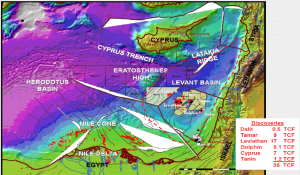
Figure 1. Gas deposits in Off-shore areas of Cyprus and Israel
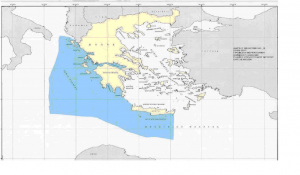
Figure 2. Greece’s part of the EEZ planned for Oil and Gas Exploration
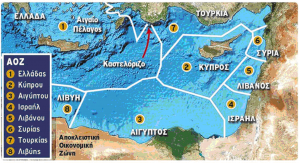
Figure 3. Exclusive Economic Zones (EEZ) in the Eastern Mediterranean
———————————————————————————–
On-Line Course in Modern Greek Offered Free
In cooperation with the Institute for Language and Speech Processing (ILSP)/
“Athena” Research Center, the Hellenic Link, Inc. is offering as a service to the community a series of Greek language lessons on its Web site: http://www.helleniclink.org ( on a 24/7 schedule)
On the home page of the site, upper left corner, click on “Learning Greek,”
to be introduced to a series of fifteen lessons of the filoglossia+ courseware.
Please inform anyone who would be interested in learning Greek of this service.
THE HELLENIC LINK, Inc.
A NON PROFIT CULTURAL AND SCIENTIFIC ASSOCIATION
OF HELLENES AND PHILHELLENES
INCORPORATED IN DELAWARE
Suite No. 278, 38-11 Ditmars Blvd, Astoria, New York 11105
Web Site: http://www.helleniclink.org Email: info@helleniclink.org
Contact Telephone: (718) 217- 0430
[1] Achilles G. Adamantiades is retired professor of nuclear engineering and energy policy; currently, he is Consultant in Energy and the Environment working intermittently for the World Bank, the African Development Bank (AfDB), the European Union Commission, and private sector clients.